The Cooking Lesson
You start at the souk and you end with a tagine you made with your own hands
It begins at the market. The teacher walks you through the vegetable souk, the spice souk, the olive souk. You buy what you will cook. Then you cook it.
14 stories
The things you wish someone had told you before you landed. Practical, honest, written by someone who lives here.

You start at the souk and you end with a tagine you made with your own hands
It begins at the market. The teacher walks you through the vegetable souk, the spice souk, the olive souk. You buy what you will cook. Then you cook it.

The souks close, the city stops, and then the smell of couscous
The souks close. The streets empty. A city that never stops moving stops moving. Then the smell of couscous.

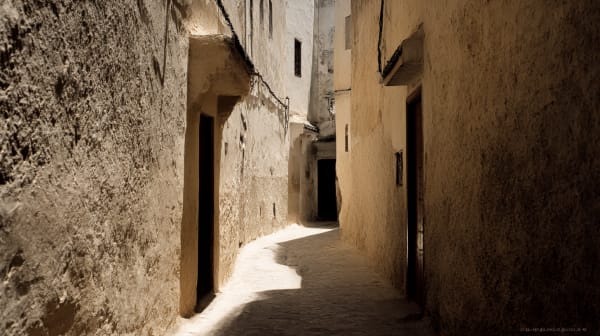
Nine thousand alleys, a tannery older than the printing press, and a university older than England.
Nine thousand alleys. No cars. The world's largest car-free urban zone. Fes does not simplify itself for visitors. It does not need to. The medina has been functioning without your approval since the 9th century.

A waterfall, a stone desert, a valley of roses, a fishing port. The mountains you can see from the rooftop are the closest.
You do not need to leave Marrakech for a week to see what surrounds it. Five of the best are less than three hours away.

Not the hotel lobby — the real thing, if you know where and when
Not the hotel lobby. Not the restaurant floor show. The real thing — if you know where and when.
When Morocco performs for itself
Twelve months. A dozen major festivals. One rule: the best ones are not the biggest ones. A calendar of what happens where and when.

A red wall built by veiled warriors. A square that turns into a kitchen at sunset. A medina you will be lost inside before you finish the sentence.
Nine hundred years of noise, craft, prayer, and commerce inside twelve kilometres of ochre wall. Nobody understands Marrakech in a day.

A guide to the Sahara you were not expecting
There is no single Sahara. Three deserts, three experiences. Merzouga is the postcard. Zagora is the river. M'Hamid is the edge.

The high pour aerates the tea and produces the foam that means it was made with care. The distance is the hospitality.
The arm rises. The stream falls half a metre into the glass without spilling. It is not showing off. It is chemistry.

Fall asleep in the north, wake up in the south — the ticket costs less than dinner
Tangier to Marrakech. Departure 23:25. Arrival 09:01. You fall asleep in the north and wake up in the south. The ticket costs less than dinner.

Camel, dune, dinner, stars, sunrise — and what nobody mentions about the toilets
The brochure shows a tent under the stars. Here is what actually happens, hour by hour, from the moment you arrive at the edge of the sand.

You will be scrubbed by a stranger and leave feeling like you have new skin
You will be naked. You will be scrubbed by a stranger. You will leave feeling like you have new skin. Because you do.

Nine hours, one mountain pass, a thousand kasbahs, and the dunes at the end
The Sahara is not next to Marrakech. It is nine hours away, over the highest road pass in North Africa. The drive is half the experience.

Nine thousand streets. No grid. Getting lost is not the risk — it is the point.
Nine thousand streets. No grid. No map that works. Getting lost is not the risk — it is the point.
Other categories
Written from the medina. Sent when it matters.